
Up to $5M
Maximum credit line
Revolving credit up to $5M, backed by your receivables, so you can fund bigger orders, more inventory, and your next phase of growth. Draw what you need, pay only for what you use, and watch your line grow as your business does.




A working capital line of credit is revolving financing that covers the everyday cost of running and growing your business: inventory, materials, payroll, and new orders. It funds the window between when money goes out and when it comes in. Unlike a term loan, which hands you a lump sum to repay on a fixed schedule, a line of credit is flexible: draw what you need, repay as revenue comes in, and draw again, up to your limit. You only pay for the capital you actually use.
Aion's working capital line of credit is asset-based, which means it's secured by your receivables, inventory, or IP. As your assets grow, your available credit grows with them, with no reapplying or renegotiating.
Most of our clients aren't covering a shortfall. They're funding growth that's arriving faster than the cash to pay for it.
Take on the larger order without waiting for the last one to pay.
Stock up for a new contract or a busy stretch, on your timing.
Cover payroll, materials, and day-to-day costs while receivables clear.
"Working capital loan" and "working capital line of credit" often get used interchangeably, but they work differently, and most options force a tradeoff between size, speed, and cost.
A lump sum up front, repaid on a fixed schedule. Predictable, but you pay interest on the full amount whether you use it or not, and you reapply every time you need more.
Revolving and lower-cost, but slow to secure, often capped well below what a scaling business needs, and rigid on terms.
Fast and low-friction, but most cap out around $250K, far below a growing operation's needs.
Advances cash against your invoices quickly, but takes over your client relationship and costs more per dollar.
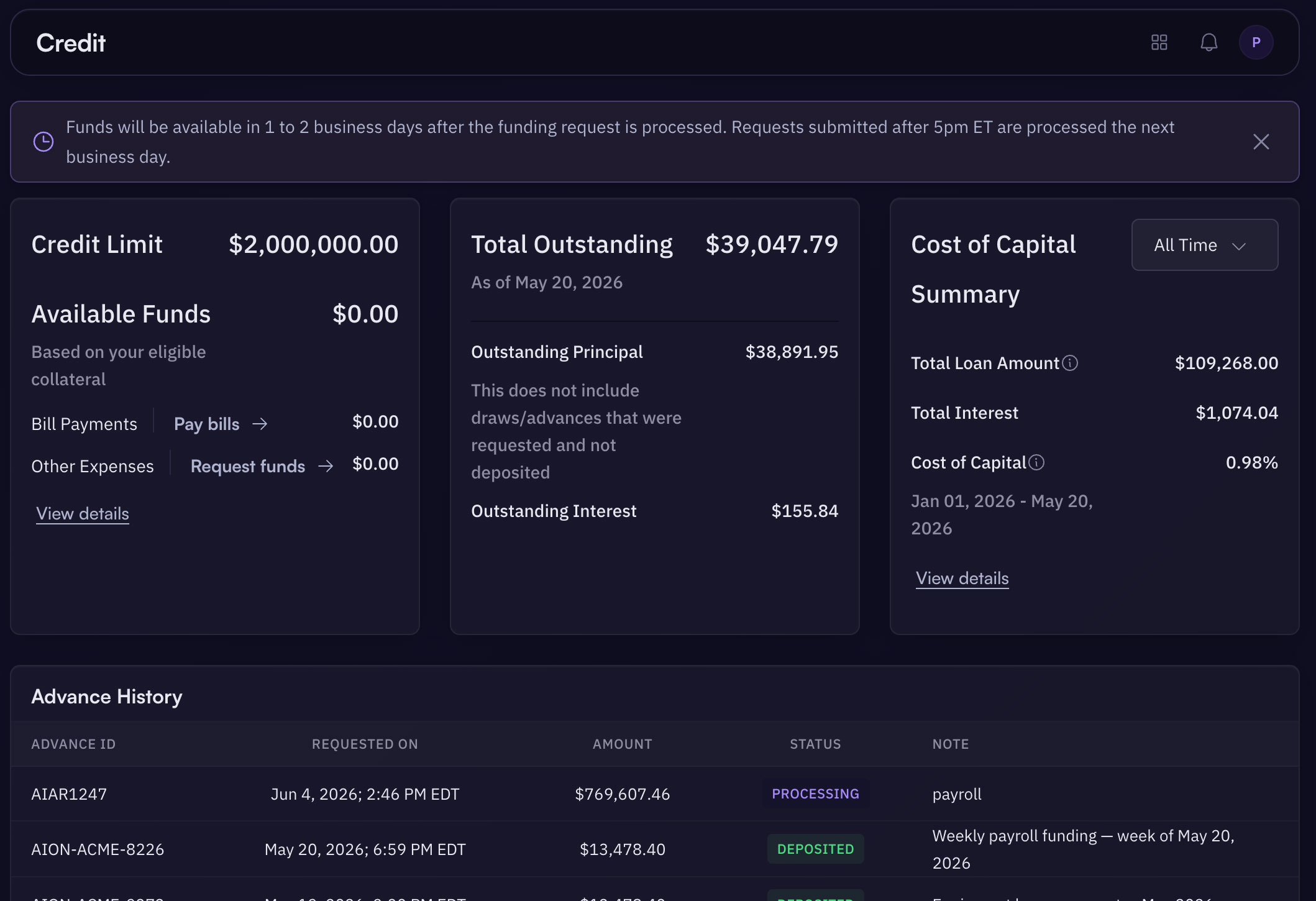
A revolving working capital line of credit up to $5M, backed by your receivables, with draw-down-only pricing and an effective cost of about 2%. Integrated with your banking, so your line grows automatically as your receivables do.
The cost of capital has two parts: a monthly facility fee, typically about 0.1% of your approved line, and the cost of what you actually draw. Because charges accrue daily on your outstanding balance and stop once you repay, most clients pay an average effective cost of capital of 2%, well below stated interest rates.
Annual interest rates typically range from 16% to 21% and vary with creditworthiness. Most clients pay an average effective cost well below stated rates.
See how much you qualify for in minutes, with no lengthy bank process and no full application to start.
Because Aion sees your receivables in real time, underwriting is faster and more flexible than a traditional bank's.
Your funds are ready when you are. Draw, repay, and draw again, and watch your line grow as your receivables do.
Credit up to $5M, often 10 to 20 times higher than fintech lenders, which typically cap at $250K.
Big-bank scale without the field exams, quarterly audits, and months of underwriting.
Banking, payments, and credit in one platform, so underwriting is automatic and your whole financial picture lives in one place.
A lending team that knows your business by name, plus AI that anticipates your needs.
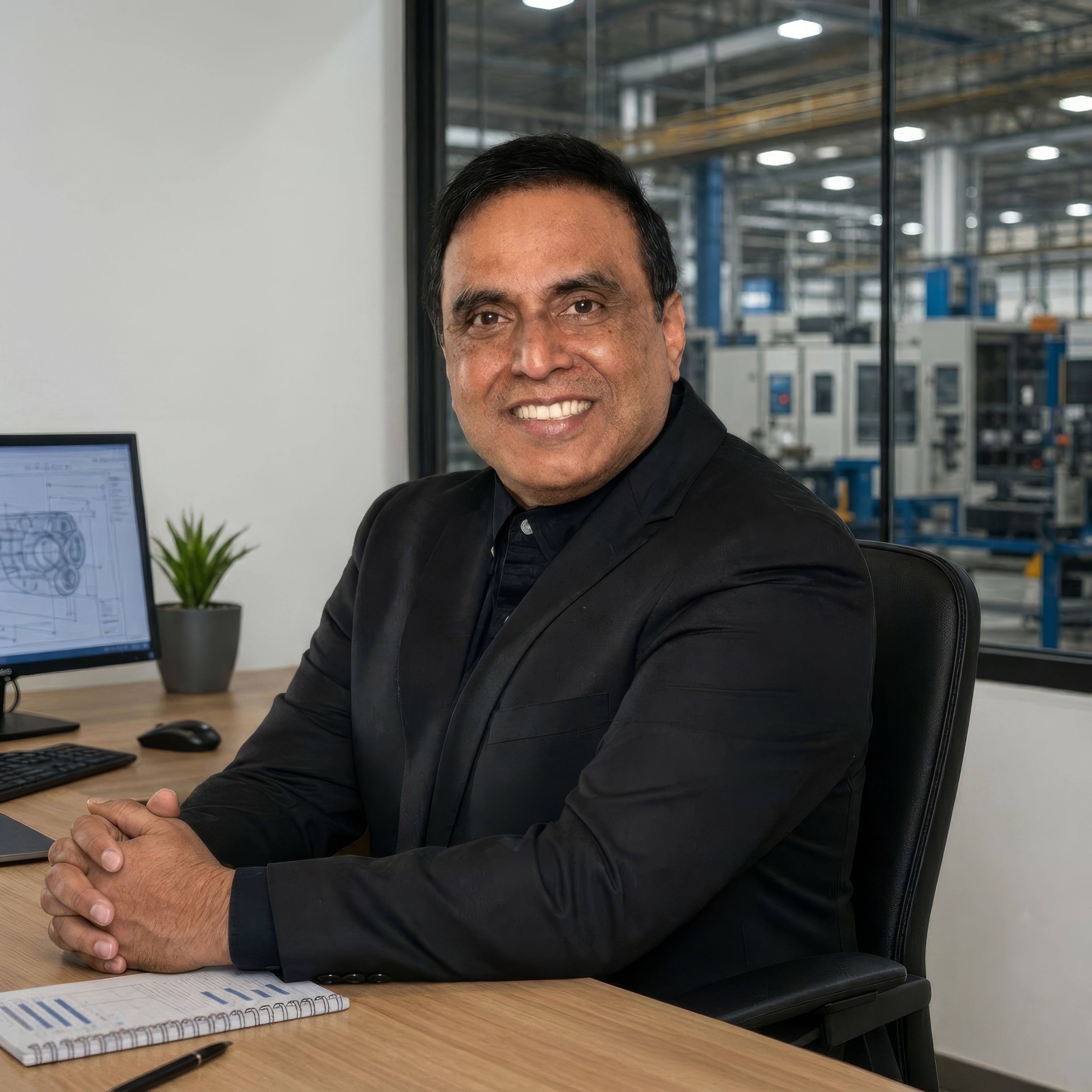
"Our growth journey — from $5M to nearly $18M — only happened with Aion."
It's revolving financing for the cost of running and growing your business: inventory, payroll, materials, and new orders. You draw what you need, repay as revenue comes in, and draw again up to your limit, paying only for what you use.
A loan gives you a lump sum on a fixed repayment schedule. A line of credit is revolving: you draw only what you need and pay only for what you use. Aion's working capital product is a revolving line of credit.
With Aion, up to $5M, backed by your receivables. Because the line is asset-based, it grows as your receivables grow, without reapplying.
You pay only for what you draw, with charges calculated daily on your outstanding balance. For most clients that works out to an effective cost of about 2%. Stated APRs range from 16% to 21% and vary with credit quality.
Check your limit in minutes, connect your receivables and banking, and draw when you need it. There's no lengthy bank process to get started.
It's built for established, growing businesses, roughly $1–50M in revenue, whose growth is outpacing incoming cash, especially in manufacturing, logistics, CPG, and similar industries.